How can we develop critical thinking in very young children?
Questions, play, stories and the freedom to choose: simple, research-backed ideas that help parents build critical thinking in young children.
Critical thinking is an essential skill that helps children observe, ask questions, analyze information and find solutions. Although it is often associated with older ages, its foundations are laid in the first years of life, through exploration, play and interaction with adults.
A systematic review published in Thinking Skills and Creativity (2022), covering 25 empirical studies, highlights the importance of dialogue, of the questions we ask children and of stories in encouraging reasoning and problem solving in early education (Thinking Skills and Creativity, 2022).
Encourage curiosity and questions
The first step is to encourage the child’s natural curiosity. When a child asks “Why?”, it is important to give simple, age-appropriate answers and to invite them to find things out on their own. Questions such as “What do you think will happen if...?”, “How could we find out?” or “Which one do you choose...? Why that one?” help them form hypotheses and explore explanations.
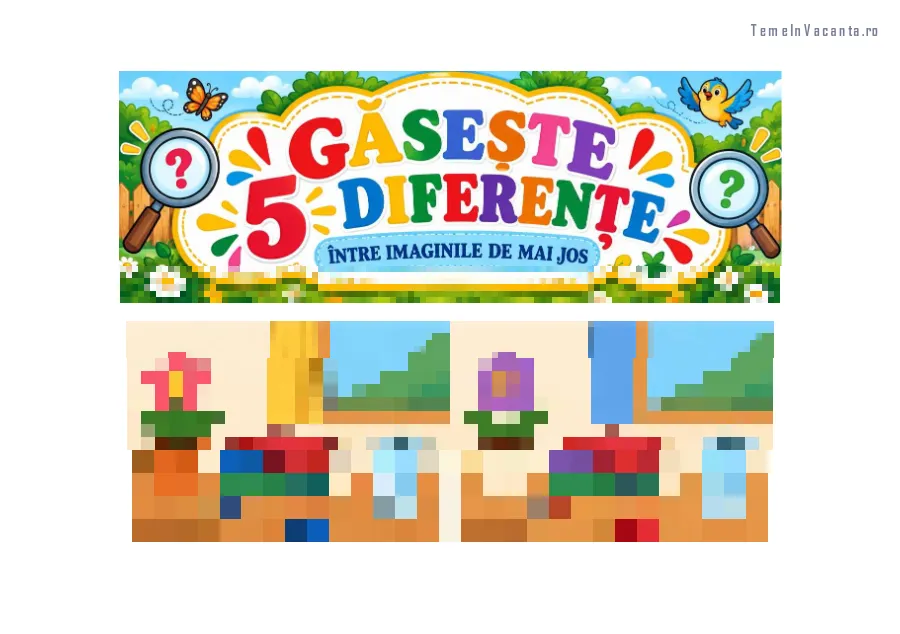
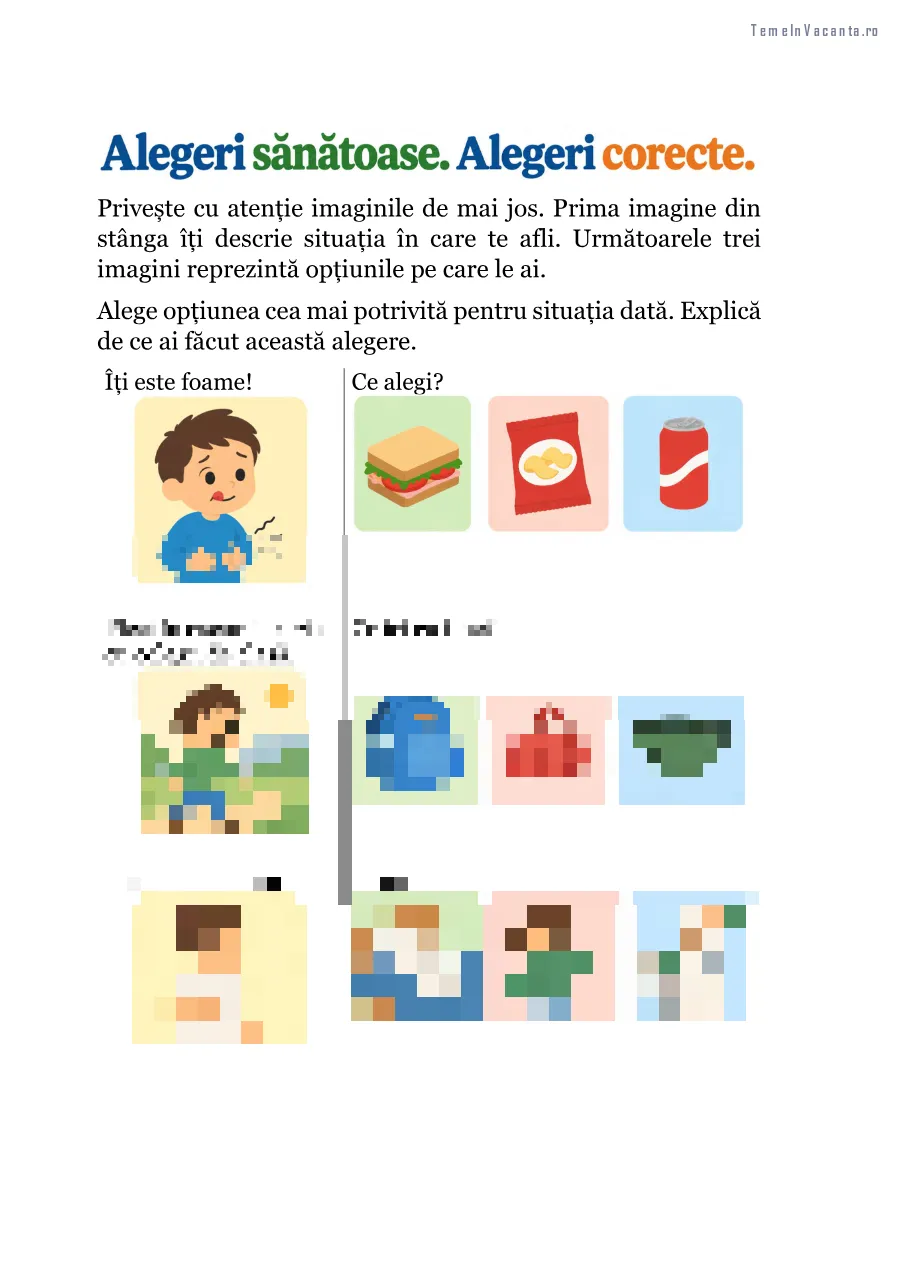
On temeinvacanta.ro you will find exercises designed for exactly this: Spot the difference, Choose the right option, Learning to classify and more in the Critical thinking section (the worksheets are in Romanian).
Play, the best tool
Play is an important tool for developing thinking. Puzzles, building blocks, sorting objects, classifying and role play give the child the chance to compare, make choices and solve problems. A systematic review and meta-analysis published in Child Development (2022), based on 39 studies, found benefits of guided play for certain learning outcomes, including cognitive flexibility, compared with direct instruction (O’Farrelly et al., 2022).
For example, if a block tower falls down, the adult can ask: “What do you think happened?” or “How can we build it so it’s more stable?”.
Autonomy and small, everyday decisions
Autonomy and decision-making also contribute to the development of thinking. Children can be encouraged to choose between activities, look for suitable objects and find solutions to everyday situations. It is important to give them time to try, without stepping in right away with the correct answer.
Interactive reading
Interactive reading is another learning opportunity. Questions such as “Why do you think the character did that?” or “What could happen next?” encourage children to express opinions, use their imagination and understand cause and effect (Thinking Skills and Creativity, 2022).
“Serve and return” conversations
Research on early development also stresses the importance of back-and-forth interactions between child and adult. The Center on the Developing Child at Harvard University explains that an adult’s attentive responses to a child’s gestures, sounds and initiatives support the development of language and of later cognitive skills (Harvard, Serve and Return).
In conclusion
Developing critical thinking in very young children does not require complicated activities, but meaningful everyday experiences. Through play, dialogue, exploration and the freedom to ask questions, parents and educators help children gradually become more curious, more independent and more confident in their own ability to understand the world.
References
- Critical thinking in the preschool classroom – A systematic literature review. (2022). Thinking Skills and Creativity, 46, 101110. doi.org/10.1016/j.tsc.2022.101110
- O’Farrelly, C. M., et al. (2022). Can guidance during play enhance children’s learning and development in educational contexts? A systematic review and meta-analysis. Child Development. doi.org/10.1111/cdev.13730
- Center on the Developing Child, Harvard University. Serve and Return: Back-and-forth exchanges. developingchild.harvard.edu